
Amsterdam wasn't born on a bike — it fought its way back onto one
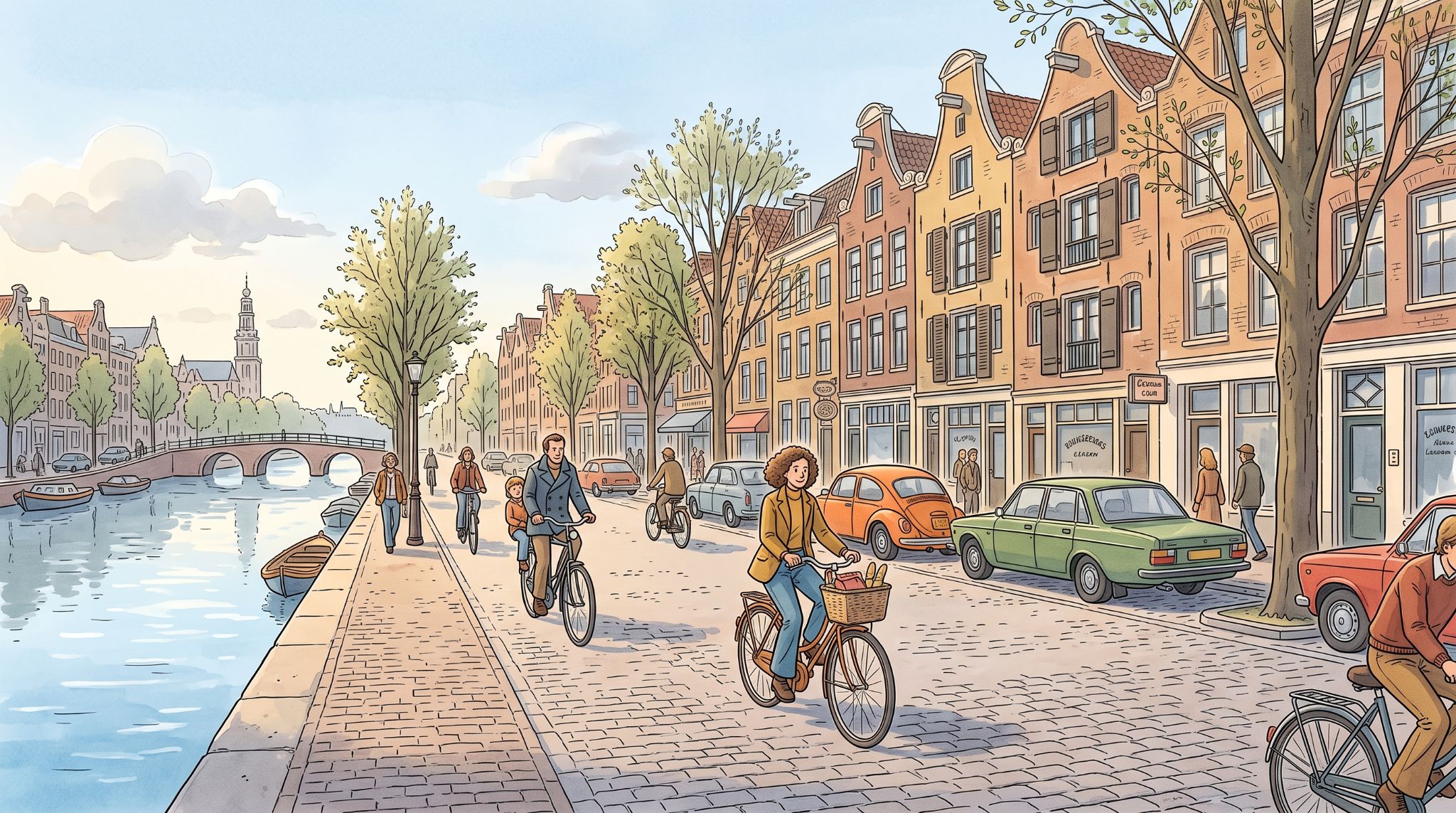
Ask anyone what makes Amsterdam Amsterdam and they’ll say the canals, the gabled houses, and — obviously — the bikes. As if the Dutch were born with a bell on the handlebar and clogs clipped into the pedals. They weren’t. In the 1960s, the Netherlands was doing everything it could to become just another car country.
When Amsterdam nearly became a parking lot
Dutch cities spent the 1950s and 60s widening medieval streets for traffic, carving urban highways through their centres, and turning historic squares into parking lots. Bicycles were treated as a relic on the way out — something the market would quietly retire once everyone could afford a car.
For a while, it worked. Cycling numbers fell, congestion rose, and the Netherlands looked set to follow the same road as the rest of car-obsessed postwar Europe.
The protest that changed the plan
Then came the toll. In 1971 alone, traffic killed roughly 3,300 people in the Netherlands — more than 400 of them children. The following year, journalist Vic Langenhoff lost his own daughter to a road accident and wrote the article that gave the crisis a name: Stop de Kindermoord, “Stop the Child Murder.”
The movement it sparked didn’t just complain — it occupied dangerous intersections, blocked streets with prams, and organised car-free play days for kids who’d otherwise have nowhere safe to be outside. Add the 1973 oil crisis, which emptied Dutch motorways on car-free Sundays and made the whole car-first bet look shakier still, and city planners suddenly had a very public reason to reconsider.
By 1975, several of these grassroots groups merged into what’s now the Fietsersbond, the Dutch Cyclists’ Union — and started fighting, street by street, for space that had already been handed to cars.
The bike lane under your wheels was a political fight
None of this happened overnight, and it wasn’t inevitable. Amsterdam’s cycling infrastructure — the segregated lanes, the priority junctions, the sheer width of a Dutch bike path — is the result of five decades of deliberate, often contested, political choices, not some inherited national talent.
Worth remembering next time a Dutch cyclist glides past you one-handed, coffee in the other: they’re not naturally gifted. They just refused, collectively, to let the car win.
Original source: SpaceDaily